Padel Rules: Complete Beginner’s Guide by M Padel
Discover the fundamental rules of padel with this beginner’s guide. Learn how to play effectively and enjoy the game. Read more to get started!
Key Takeaways
- Padel is played in doubles on a 20m x 10m enclosed court with glass walls, using the same scoring system as tennis and underhand serves only.
- Walls become part of play after the ball bounces once on the court, but direct contact with the wire fence or ceiling typically loses the point.
- Matches are typically best of three sets, each won by the first pair to six games with a minimum advantage of two games, with a tie break at 6–6.
- Understanding basic serve rules, common faults, and how to use walls will prepare you for your first game at M Padel.
- Official regulations come from the International Padel Federation (FIP), but this guide covers the practical rules of padel every beginner needs.
Introduction to Padel Rules for Beginners
Padel has exploded across Europe since the early 2000s, combining elements of tennis and squash into a fast, social sport that’s easier to pick up than either. At M Padel, we help new players get started with the basics before their first booking.
Unlike tennis, padel is played exclusively in doubles on a smaller, enclosed court where glass walls keep rallies going longer. You don’t need to memorise every FIP regulation to enjoy a friendly game—the following rules will help you avoid confusion and start playing with confidence.
The Basics of Padel
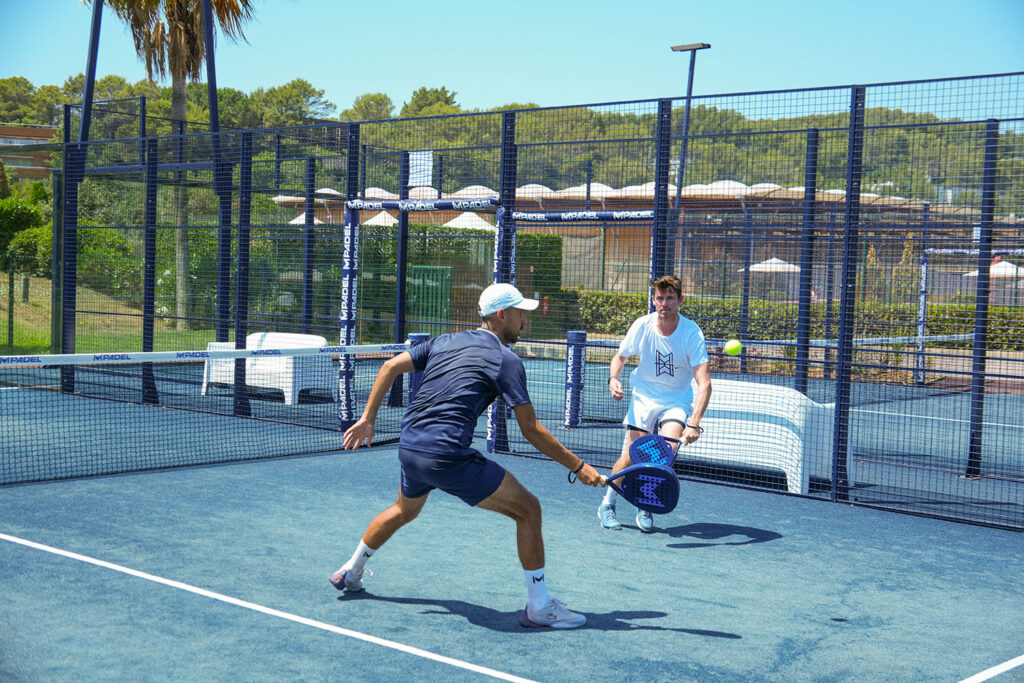
Every padel point follows a simple pattern: serve, return, rally. Play begins with an underhand serve, the ball must bounce once before the receiver can return it, and rallies continue until someone commits a fault. Padel is almost always played in doubles, with singles courts being rare exceptions.
The Padel Court and Its Features
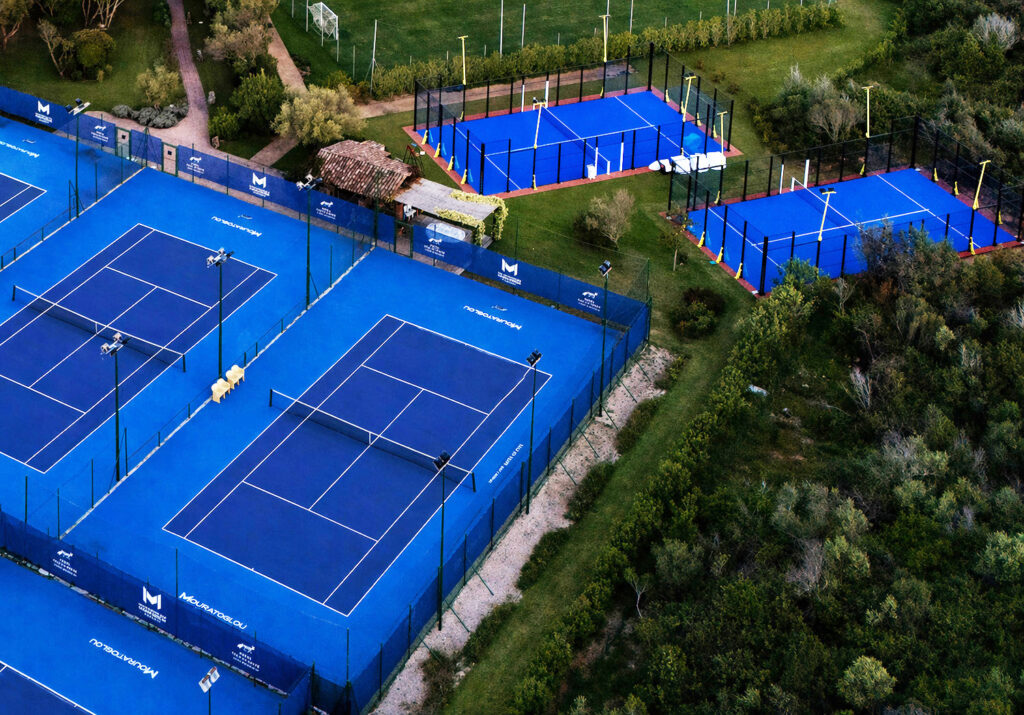
A standard padel court measures 20 metres long by 10 metres wide, divided by a net standing approximately 88 cm high at the centre and 92 cm at the net posts. The back wall features 3-4 metres of tempered glass, with metal mesh fencing extending the enclosure to 4 metres total.
The playing surface is typically artificial grass with sand infill, available in green, blue, or clay-style colours. The service line sits 6.95 metres from the net, with a central line dividing the right service court from the left. All court lines are considered “in.”
The glass walls are what make padel unique—the ball can rebound off them after bouncing on the ground, creating angles you won’t find in tennis.
Equipment: Racket and Balls
Padel uses a solid, perforated racket without strings, usually 45–45.5 cm long and up to 38 mm thick with a foam core. A safety rope (wrist strap) is mandatory under FIP rules and should always be attached when you play padel at M Padel.
Racket shapes vary—round for control (ideal for beginners), teardrop or diamond for power. Balls resemble depressurized tennis balls, yellow or white, with specific bounce characteristics. M Padel staff can recommend beginner-friendly equipment for your first session.
Scoring System and Match Format
Padel uses the same scoring system as tennis:
Points Won | Score |
0 | 0 (Love) |
1 | 15 |
2 | 30 |
3 | 40 |
4 | Game |
If both teams reach 40, it’s “deuce,” and a pair wins the game by gaining two consecutive points (advantage, then game).
Sets are won by the first team to six games with at least a two-game lead. At 6–6, a tie break decides the set—first to seven points, winning by two. A full match example might read: 6–4, 3–6, 7–6 (7–5). Players change ends after every odd-numbered game.
Serving Rules in Padel
All rallies start with an underhand serve hit diagonally into the opponent’s service box. The server must have at least one foot on the ground behind the service line while serving, and two faults lose the point.
Server’s Position and Motion
The server stands behind the service line, between the central line and the side of the court, with the server’s feet outside all lines until the ball strikes the racket. The ball must bounce once on the ground when hitting the serve—striking it from the air is illegal.
Contact must occur at or below waist level. Running or jumping into the serve isn’t permitted. Servers alternate from the right service court to the left with each point, always hitting diagonally into the opponent’s square.

Serve Direction, Bounce, and Walls
A valid serve lands in the opponent’s service box opposite the server, on or inside the lines. After the served ball lands correctly, it may hit the receiver’s glass walls but must not hit the wire fence before the second bounce.
The receiver must allow the ball to bounce once before returning—volleying serves is prohibited. If the ball hits the net and lands in the correct box, it’s a let, and the initial serve is replayed.
Common Serving Faults for Beginners
Typical faults include:
- Hitting above waist level
- The server’s feet may not touch or cross the service line while serving
- Ball lands outside the service box
- Ball hits the wire fence before bouncing in the box and hits the receiver’s side
Two consecutive faults award the next point to the opposing player. Prioritise consistency over power in your early sessions.
Rallies, Walls, and What’s In or Out
After the serve and return, players can volley or hit groundstrokes. The strategic use of walls separates padel from tennis and creates longer, more exciting rallies.
Using the Glass Walls
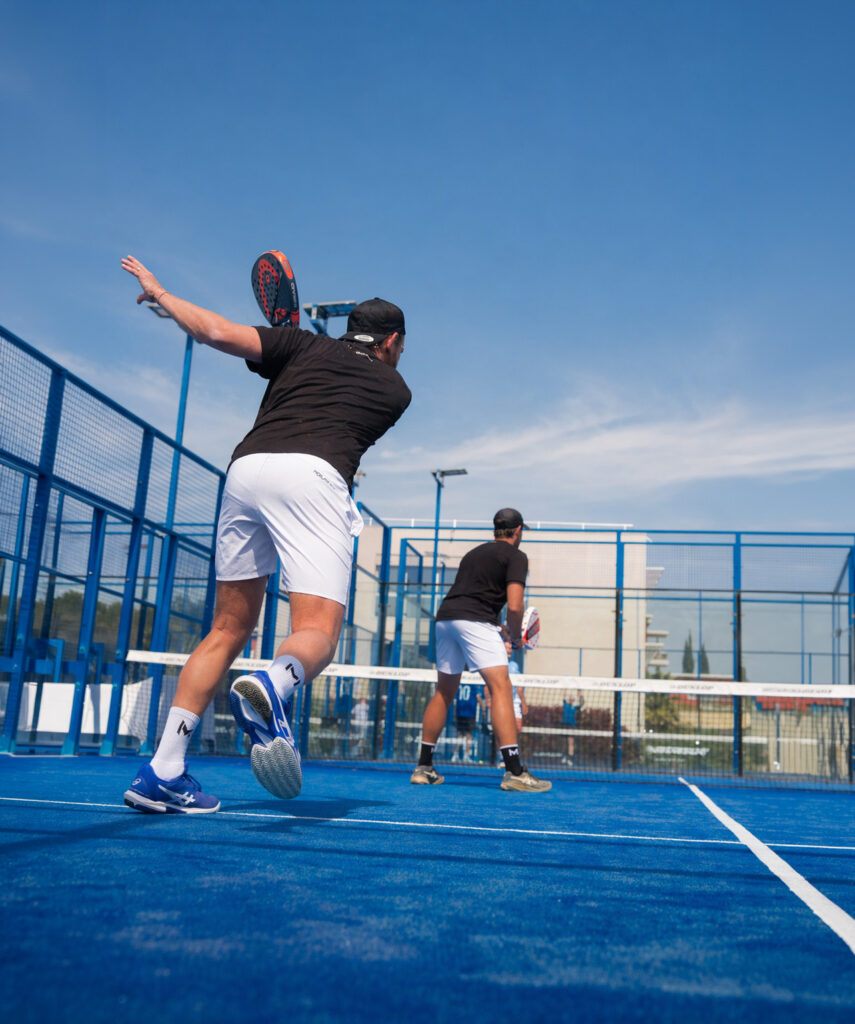
Once the ball bounces on the court, it can legally hit the back wall or side glass walls before you return it. A common defensive pattern: the ball bounces near the baseline, hits the back glass, and you let it come off the wall before striking.
Multiple glass rebounds are legal—the ball might hit the back wall then side glass and remain playable. Tactical shots like lobs that die high on the back glass or “bandeja” overheads aimed deep work brilliantly.
Metal Fence and Ceiling: What Is Out
If your struck ball directly hits the wire fence or other fixture on the opponent’s court without first bouncing, you lose the point. If the ball bounces in the opponent’s court diagonally and then hits their metal fence, opponents must return before the ball bounces twice.
In most indoor courts, including M Padel venues, if the ball strikes the ceiling after crossing the net, the opposition wins the point.
Authorised and Prohibited Bounces
Legal bounces:
- Ball bounces on court, then hits glass walls, then returned
- Ball touches the net and lands in play
- Ball rebounds from opponent’s glass back over net untouched (you win the point)
Illegal bounces:
- Ball bounces twice on court (opponent wins)
- Ball hits fence before court bounce
- Ball hits ceiling post-net crossing
How to Win Points: Main Faults and Violations
Points are won either by hitting unreturnable winners or when opponents commit faults. Many early points at M Padel come from simple errors.
Contact with Net, Posts, and Opponent’s Court
If you, your racket, or clothing touches the net or net posts during play, you lose the point. You cannot reach over to the opponent’s court until the point ends. However, your follow-through may cross over the net after a legal hit, provided nothing touches the net.
Double Hits, Early Hits, and Missed Balls
A double hit by one player or consecutive partner contacts loses the point. If the ball hits the opponent’s body directly before bouncing, that team loses the point. Missing a swing isn’t a fault, but letting the ball bounces twice awards the point to opponents.
Behavioural and Time-Related Faults
FIP rules apply time limits: approximately 25 seconds between points and 90 seconds at changeovers. Throwing rackets, verbal abuse, and delays can result in penalties. At M Padel, we encourage fair play and self-officiating in casual matches.
Positioning, Doubles Tactics, and Rotation
Basic Starting Positions
On serve: the server starts near the baseline while their partner moves toward the net. Returners start near the baseline, with the partner positioned mid-court. During neutral rallies, both players move together—side by side attacking or defending near the glass.
Communication and Shot Selection
Call “mine,” “yours,” “leave,” or “out” to avoid partner collisions. Under pressure, lob high to the back wall rather than attempting risky winners. Move as a unit—both forward to attack, both back to defend.
Key Differences Between Padel and Tennis
- Padel courts are about one-third the area of tennis courts
- The underhand serve in padel creates more consistent rallies
- Padel is played exclusively as doubles professionally
- Strategic wall play doesn’t exist in standard tennis
Tennis players adapting to M Padel should shorten swings and learn to let the ball pass for glass rebounds.
Official Regulations and Competitive Play
Role of the International Padel Federation (FIP)
The International Federation (FIP) governs padel globally, standardising court dimensions, equipment, and the important rules. The professional circuit follows FIP regulations strictly. M Padel tournaments align with these guidelines.
Match Procedures
Pre-match, a coin toss determines who chooses to serve, receive, or pick a side. Service order remains fixed throughout each set. In a tie break, service alternates every two points after the first game, played to seven by two.
Clothing, Punctuality, and Behaviour
Wear sports clothing and non-marking shoes. Arrive on time—late arrivals risk walkover. Respect opponents and maintain composure throughout play.
FAQ
Can I play the ball outside the court in padel?
Some courts allow exiting through side doors to retrieve balls that have bounced in and gone out, but this requires explicit authorisation. At many M Padel venues, outside play is restricted for safety. Always check local house rules before attempting this.
What happens if the ball hits the top of the glass wall?
If the ball bounces on court then strikes the top edge of the glass and returns in play, it’s typically considered in. For casual games, agree beforehand how to handle rare edge cases.
Is it legal to change racket hands during a point?
FIP rules allow switching hands during a rally, but the safety rope must stay attached. For beginners, prioritise footwork over hand changes.
Do we always have to play best of three sets?
Official matches use best of three points format, but social games often use shortened formats fitting available court time. Agree on format before starting at M Padel.
Can a beginner play with experienced players without breaking etiquette?
Mixed-ability games are common in padel. Be upfront about your level, accept guidance, and focus on learning. M Padel organises level-based sessions to help beginners improve comfortably.