How to master the padel serve: 7 coaching tips from Mouratoglou experts
Key Takeaways
- The padel serve must be hit underarm and below waist height after one bounce inside the server’s own service box, mastering this legal foundation comes before any power or spin.
- Balance, contact point and toss height matter far more than raw power at club level; a rushed or off-balance motion is the leading cause of inconsistent serves.
- Placement and disguise (wide serves, body serves, light slice) disrupt an opponent’s rhythm more effectively than a hard, predictable serve down the middle.
- A great serve is finished only when you’ve recovered into position, treat the serve and your first recovery step as a single connected motion.
- Mouratoglou coaches build the serve through focused, cue-based repetition rather than generic warm-up reps, and individualised feedback accelerates progress at every level.
Why the Padel serve deserves more attention
The serve is the only shot in padel you fully control. There is no opponent dictating the pace, no bounce off the glass to read, and no partner covering for you — just you, the ball, and a decision about where the point begins. Yet on most club courts, it is treated as an afterthought: a formality to get the ball in play rather than a shot that can set up the entire point.
At Mouratoglou, our coaches approach the serve the way tennis coaches approach a first serve in tennis: as a weapon to be built deliberately, not a habit picked up by accident. Because padel is always played in doubles, a well-placed serve doesn’t just challenge the returner — it can immediately put your partner at the net in a stronger position for the rest of the point.
This guide breaks down the legal fundamentals of the padel serve, seven coaching tips used in Mouratoglou sessions, the most common mistakes we see from intermediate players, and a simple practice routine you can start using this week.
The rules of a legal padel serve
Before working on technique, it helps to know exactly what makes a serve legal. The padel serve differs from tennis in several important ways, and misunderstanding these basics is one of the most common sources of double faults among players transitioning from tennis.
Rule | Requirement |
Contact height | The ball must be struck at or below waist height (below the server’s hip) |
Bounce | The ball must bounce once inside the server’s own service box before contact |
Foot position | Both feet must stay behind the service line until contact is made |
Motion | The serve must be hit underarm — no overhead motion is permitted |
Target | The ball must land diagonally in the opponent’s service box |
Let serves | A serve that touches the net and lands correctly is replayed, as in tennis |
These rules exist to keep the serve a controlled, rally-starting shot rather than an outright weapon, which is exactly why placement, disguise and consistency matter more than raw pace.
7 Coaching Tips to improve your padel serve
1. Start with balance, not power
Before thinking about pace, focus on a stable base. Your front foot should stay behind the service line, weight slightly forward, knees soft. A rushed, off-balance toss is the number one cause of inconsistent serves, even before technique comes into play. Mouratoglou coaches often ask new players to serve from a completely static position first, removing any transfer of weight, until the contact point becomes repeatable.
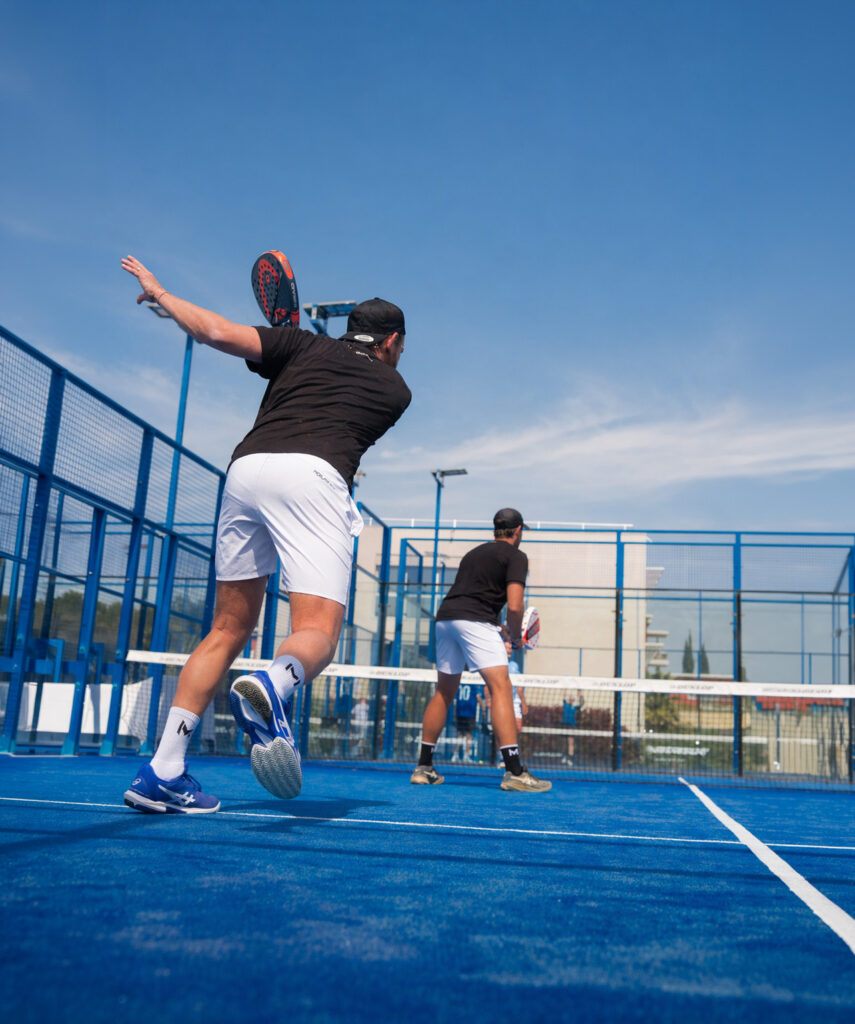
2. Drop the ball, don’t toss it
Unlike tennis, the padel serve requires the ball to bounce below waist height before contact. Many beginners still “toss” the ball upward out of tennis habit. Instead, let it fall naturally from a relaxed arm, and strike it on the way down at the top of the bounce, that’s where you get the cleanest contact and the most control. Practising the drop in isolation, without even swinging, is a simple way to build this habit.
3. Vary your placement, not just your power
A hard serve down the middle is predictable. Mouratoglou coaches teach players to work the width of the box, wide serves that pull the returner off court, and body serves that jam their swing. Placement disrupts rhythm far more effectively than raw speed at club level, and it opens up the very angles your partner at the net is waiting to exploit.
4. Use the underarm motion to generate slice
Because the serve is underarm and below the waist, generating spin comes from wrist and racket-face angle rather than a big swing. A slight slice serve pulls the ball away from the returner after the bounce, making it harder to attack, a small technical detail with a big tactical payoff. Start by exaggerating the angle in practice, then dial it back until it feels natural.
5. Serve with a plan, not on autopilot
Every serve should have a purpose: opening the court for your partner at the net, setting up a lob, or forcing a weak return you can attack. Before you serve, decide where you want the point to go, this single habit separates intermediate players from advanced ones. Even a simple pre-serve routine, like picking a target zone, sharpens focus and consistency.
6. Practice serve-and-move as one motion
In padel, the serve isn’t finished when the ball leaves your racket, you need to recover into position immediately, since your partner at the net is exposed until you do. Drill your serve together with your first step of movement, not as two separate actions. Coaches often add a cone or marker just behind the baseline to give players a physical cue for where to recover to.
7. Warm up your serve like a skill, not a formality
Most club players hit two warm-up serves and move on. Treat your serve like any technical skill: 10–15 repetitions focusing on one cue at a time (toss height, contact point, or placement) will improve it far faster than serving on autopilot during matches. A few focused minutes before every session compounds significantly over a season.
Common serve mistakes and how to fix them
Mistake | Fix |
Tossing the ball upward like in tennis | Let the ball drop naturally from a relaxed arm and strike it below waist height on the way down |
Serving flat down the middle every time | Alternate wide, body and slice serves to disrupt the returner’s rhythm and set up your partner at the net |
Rushing the motion under pressure | Slow the pre-serve routine down — a consistent rhythm before contact improves reliability under match pressure |
Standing frozen after the serve | Combine the serve with an immediate recovery step so you’re never caught out of position |
Only warming up with two casual serves | Dedicate focused practice reps to one technical cue at a time before every session |
A simple serve practice routine
You don’t need a coach on court every session to keep improving. Try this short routine two or three times a week:
- 10 serves focusing only on balance and a stable finish position
- 10 serves focusing only on contact point (top of the bounce, below waist height)
- 10 serves alternating wide and body placement, calling your target out loud before each one
- 5 serves adding a light slice, checking the ball curves away from an imaginary returner
- 5 full-speed serves combined with an immediate recovery step toward the net
This kind of cue-based repetition, one focus at a time, is exactly how Mouratoglou coaches structure technical development, whether for a first-time player or a competitive one.
How the serve sets up your partner
Because padel is always played in doubles, a serve is never just about the server, it’s the opening move for the whole team. A well-placed wide serve, for example, doesn’t just challenge the returner; it pulls them off court and opens an angle your partner at the net can anticipate and close down before the return even lands.
This is why Mouratoglou coaches encourage pairs to discuss serve patterns together, not just individually. Knowing in advance whether your partner is about to serve wide or to the body lets the net player pre-position slightly, turning a routine serve into a coordinated team tactic rather than an isolated shot.
Ready to work on your serve with a coach?
These tips will sharpen your serve, but nothing replaces feedback from a certified coach watching your motion in real time. Mouratoglou’s coaching methodology is built on this kind of individualised technical correction, applied consistently across every level, from a player’s very first lesson to advanced tactical training.
Find an M Padel club near you and book a session with one of our coaches, or explore our coaching methodology to see how we structure player development from day one.
FAQ
How do I serve consistently in padel?
Consistency comes from balance and contact point, not power. Keep your front foot behind the service line, let the ball drop naturally below waist height, and strike it near the top of the bounce with a controlled, repeatable motion. Isolating one technical cue per practice session, rather than trying to fix everything at once, builds consistency fastest.
What are the basic rules for a padel serve?
The serve must be hit underarm, below waist height, after one bounce inside the server’s own service box, and it must land diagonally in the opponent’s service box. Both feet stay behind the service line until contact. A serve that clips the net and lands correctly is replayed, just like in tennis.
Can you add spin to a padel serve?
Yes. Adjusting the racket-face angle and wrist action at contact lets you add slice, which curves the ball away from the returner after the bounce and makes it harder to attack. Most players start by exaggerating the angle in practice before dialling it into match play.
How can I improve my padel serve fastest?
Focused repetition with a specific technical cue, such as toss height or contact point, combined with feedback from a certified coach is the fastest way to see real improvement. Treating the serve as a standalone skill to drill, rather than something to only practise inside full matches, accelerates progress significantly.
Why does serve placement matter more than serve speed in padel?
Because the court is enclosed and rallies are built around angles rather than outright winners, a well-placed serve disrupts the returner’s positioning and can immediately set up an advantage for your partner at the net, something raw pace alone rarely achieves at club level.