Padel volleys and smashes: how to attack at the net
Key Takeaways
- The net is where most points in padel are decided, which makes the volley the shot you’ll use most often once you reach an attacking position.
- A padel volley is a short, compact punch, not a full swing — over-hitting is the most common technical mistake at the net.
- The smash should be used to finish a point safely, not to end every rally with maximum power; shot selection matters more than raw force.
- Good footwork and a split step before contact make the difference between a controlled volley and a rushed, defensive one.
- Mouratoglou coaches build net play through repetition-based drills that isolate footwork, contact point and shot selection separately.
Why net play decides points in padel
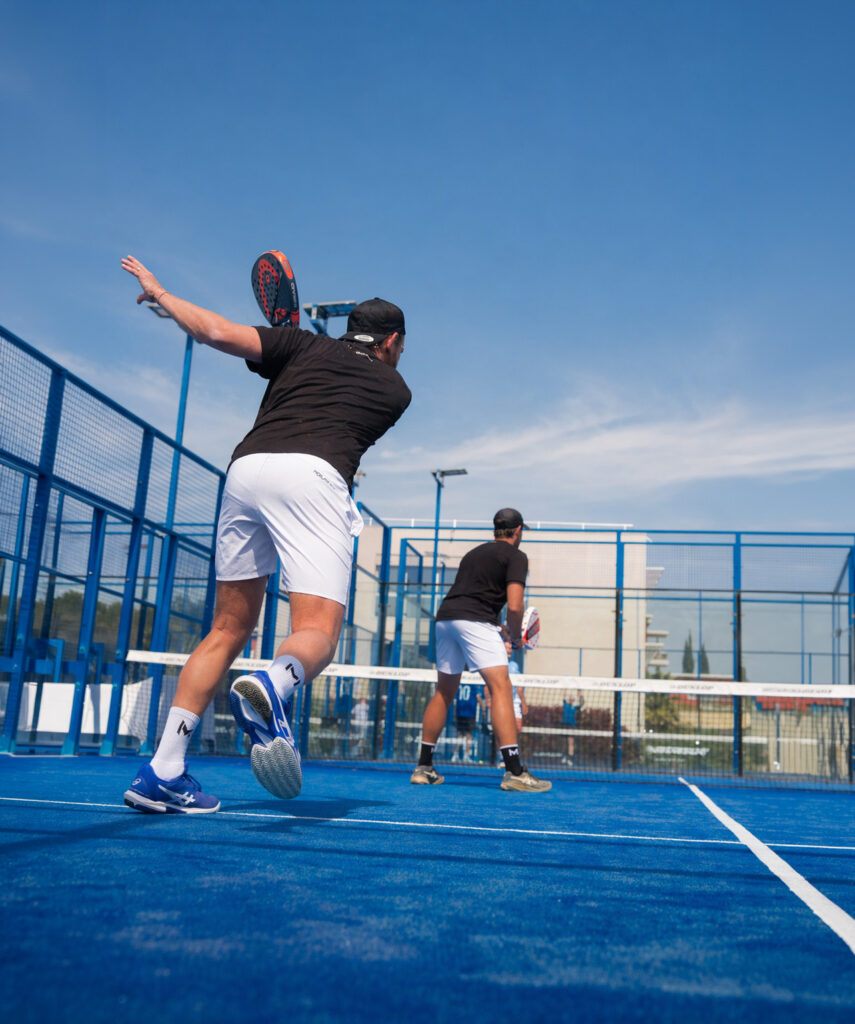
In padel, the point rarely ends from the back of the court. Because the enclosed court and glass walls make deep shots harder to put away, most winning points are finished at the net, through a well-timed volley or a controlled smash. This is why coaches spend so much time on net play once a player has the basic groundstrokes and serve in place.
Unlike tennis, where a big swing can generate a winner from anywhere, padel rewards compact, controlled shots at the net. A player who volleys with a full swing usually loses control and gives the point back to their opponents. Learning to attack at the net with discipline, rather than pure power, is one of the clearest markers of a player moving from intermediate to advanced level.
The volley: your control shot at the net
The volley in padel is a short, compact shot played before the ball bounces, usually from an attacking position near the net. Its purpose is control, not power — a well-placed volley into open space or at an opponent’s feet is far more effective than a hard, flat volley hit straight at a defender.
Volley type | When to use it |
Deep volley | When opponents are pinned at the back, to keep them on the defensive and buy time to close the net further |
Angled volley | When there is open space to the side, to pull opponents out of position and open the court for the next shot |
Volley at the feet | When an opponent is moving forward, to force an awkward half-volley or a defensive shot |
Soft volley (block) | When the incoming ball is fast, to absorb pace and keep the ball low rather than trying to add power |
A short, punching motion with a firm wrist and minimal backswing is what separates a controlled volley from a rushed one. Most club players lose points at the net not because their volley technique is wrong, but because they try to generate power that the shot was never designed to produce.
The smash: finishing the point safely
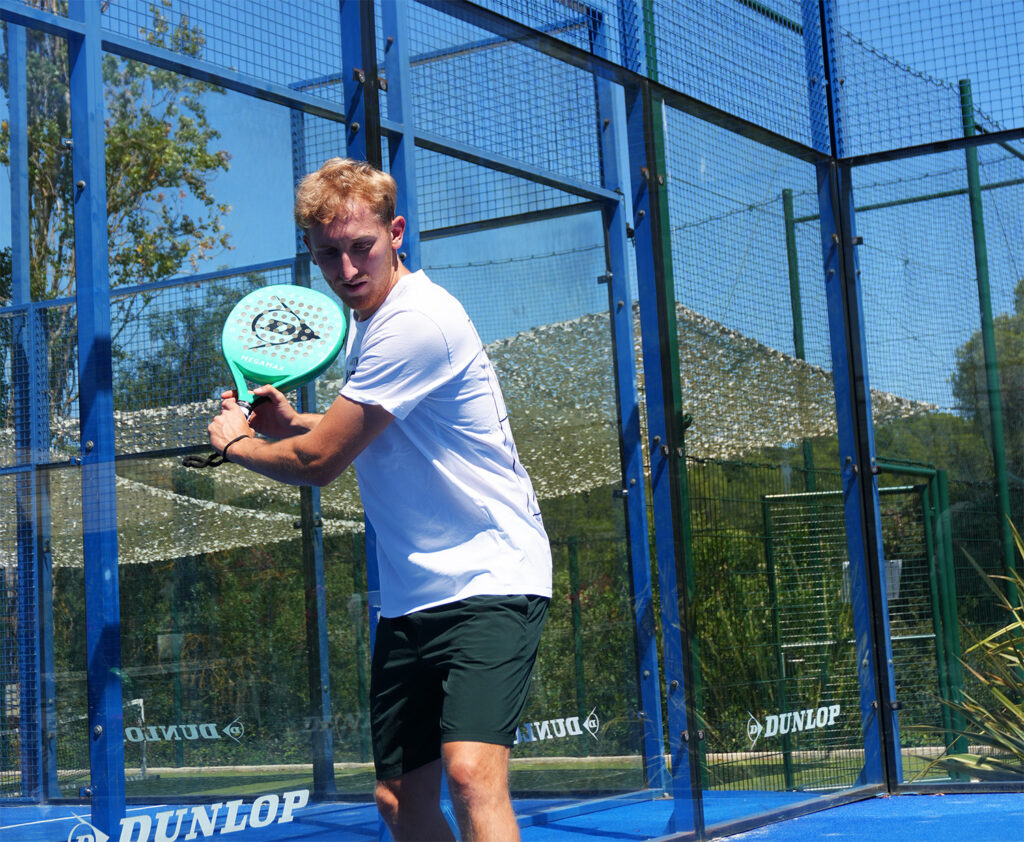
The smash is padel’s most satisfying shot to hit, and also one of the easiest to overuse. Because the court is enclosed, a smashed ball that goes long or wide off the glass can come back into play, so a smash hit with reckless power carries real risk. The best players treat the smash as a shot to finish a point that’s already been won through good positioning, not a shot to force through pressure alone.
There are two main types of smash in padel: the flat smash, hit with full power when the ball sits up high and the court behind the opponent is open, and the smash off the glass, played more conservatively when a full-power smash risks sending the ball out or straight back to the opponents. Choosing the right one, rather than always going for maximum power, is what keeps the smash a weapon instead of a liability.
Common attacking mistakes at the net
Mistake | Fix |
Swinging fully on the volley instead of punching it | Shorten the backswing and use a firm wrist to guide the ball rather than power it |
Smashing every high ball at full power | Choose placement over power when the smash isn’t a clear winner, especially near the glass |
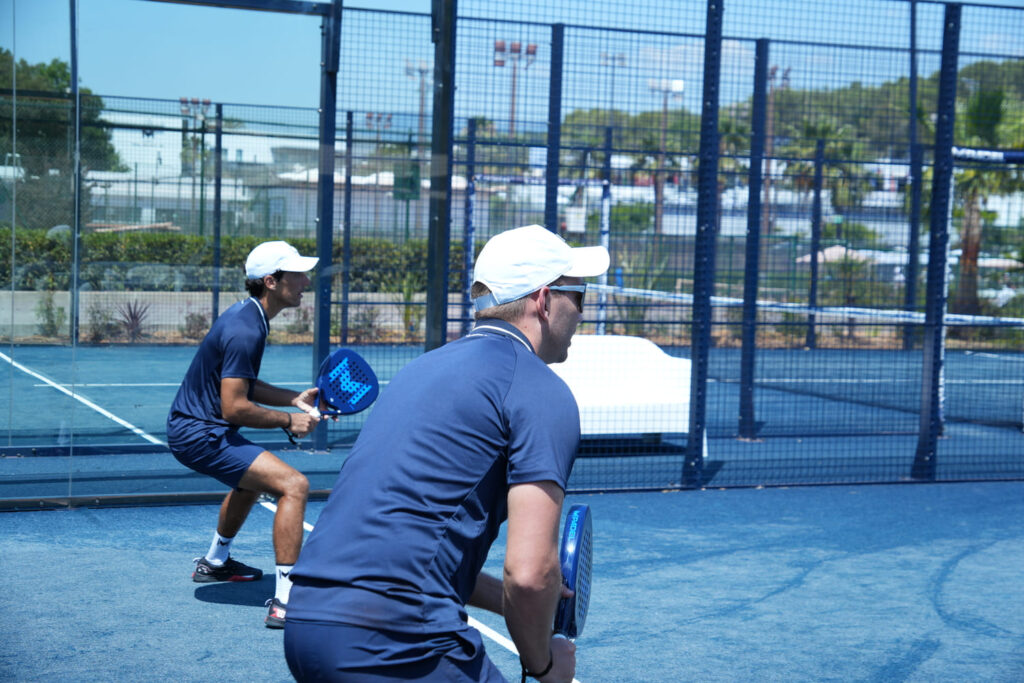
Standing flat-footed at the net | Use a small split step just before your opponent makes contact, to stay ready to move in any direction |
Volleying straight at an opponent | Aim for open space or an opponent’s feet to make the next shot harder for them |
Backing away from the net under pressure | Hold your ground and volley with control instead of retreating, which usually gives the point away |
A simple volley and smash drill routine
These shots improve fastest with repetition against a feed, rather than only inside full points. Try this short routine two or three times a week with a partner or coach:
- 10 volleys focusing only on a short, compact motion, with no backswing
- 10 volleys aimed at specific targets — deep, angled, and at the feet — to build placement control
- 10 split-step repetitions without a ball, just to build the timing habit before every net exchange
- 10 smashes off a high, easy feed, focusing on balance and placement rather than pure power
- 5 smashes played more conservatively off the glass, to practise the safer option when a full-power smash isn’t available
Isolating footwork, contact and shot selection separately — rather than trying to improve everything inside a real point — is how Mouratoglou coaches build reliable net play at every level.
How attacking shots connect to team positioning
Volleys and smashes don’t happen in isolation — they’re the payoff of good team positioning. A pair that has worked to reach the net together, as covered in our guide to padel doubles strategy, creates the openings that make volleys and smashes effective in the first place. Attacking technique without positioning tends to produce forced, low-percentage shots, while good positioning without finishing technique leaves points unclaimed.
This is why Mouratoglou coaching sessions rarely separate the two: tactical positioning and net technique are trained together, so players learn not just how to volley and smash, but when the situation actually calls for it.
Reading the ball early to attack with confidence
Great net players don’t wait until the ball arrives to decide what to do with it — they start reading the trajectory the moment their opponent makes contact. A ball that sits up high, coming with less pace, is usually a smash opportunity. A fast, low ball driven at your body calls for a compact block volley instead of an attacking swing.
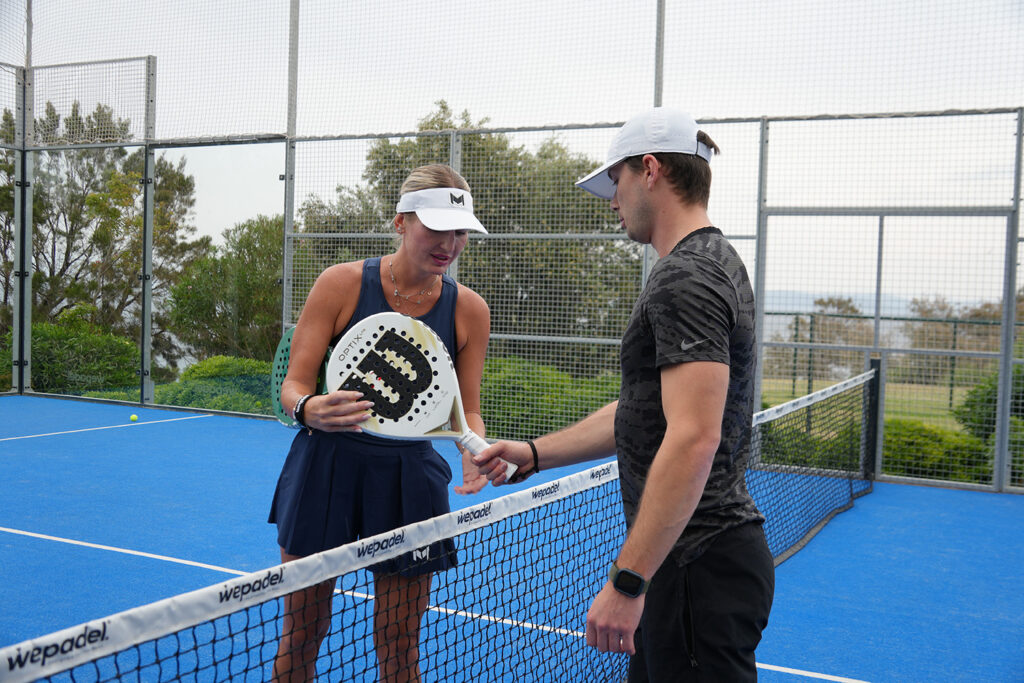
This early read is what allows advanced players to look unhurried at the net, even in fast exchanges. It’s a skill built through repetition rather than reaction speed alone, which is why Mouratoglou coaches introduce shadow drills — reading a feeder’s racket face without a ball — before adding full-speed exchanges.
Sharpen your net game with a coach
Volleys and smashes are technical shots that improve fastest with direct feedback on footwork, contact point and shot selection. Mouratoglou’s coaching methodology builds net play alongside tactical positioning from the earliest lessons, so players develop both the shot and the judgement to use it well.
Ready to play? Check opening hours, and book your first game.
FAQ
How do I improve my volley in padel?
Shorten your backswing and use a short, punching motion with a firm wrist instead of a full swing. Practising against a steady feed, aiming at specific targets like an opponent’s feet or open space, builds control faster than only volleying inside full points.
When should I smash in padel?
Smash when the ball sits up high enough to attack safely and there’s clear space behind your opponents. When conditions aren’t ideal, a smash played more conservatively off the glass is usually the safer choice than forcing full power.
Why do my volleys keep going out in padel?
This is usually caused by swinging too much rather than punching the ball. A shorter, more compact motion with minimal backswing gives far more control than a full tennis-style swing.
What is a split step in padel?
A split step is a small hop just before your opponent makes contact with the ball, which puts you on the balls of your feet and ready to move quickly in any direction — essential for reacting to volleys and smashes at the net.
Is the smash the most important shot in padel?
It’s an important finishing shot, but not the most important overall. Good positioning and disciplined volleys create far more points at club level than the smash alone, which is best used to close out points that are already won.