Padel warm-up routine: how to prevent common injuries
Key Takeaways
- Padel’s short sprints, sudden direction changes and repeated overhead motion put real strain on the shoulder, ankles and elbow, even though rallies feel less physically demanding than tennis.
- A proper warm-up prepares the specific muscles and joints padel uses most, rather than relying on a few generic stretches before playing.
- Padel elbow, similar to tennis elbow, is one of the most common overuse injuries in the sport and is largely preventable with the right preparation and technique.
- Ankle sprains are common due to padel’s frequent lateral movement and quick stops, making mobility and stability work a key part of injury prevention.
- Mouratoglou coaches build warm-up and recovery habits into training from the earliest levels, not just for competitive or older players.
Why padel players get injured more than they expect
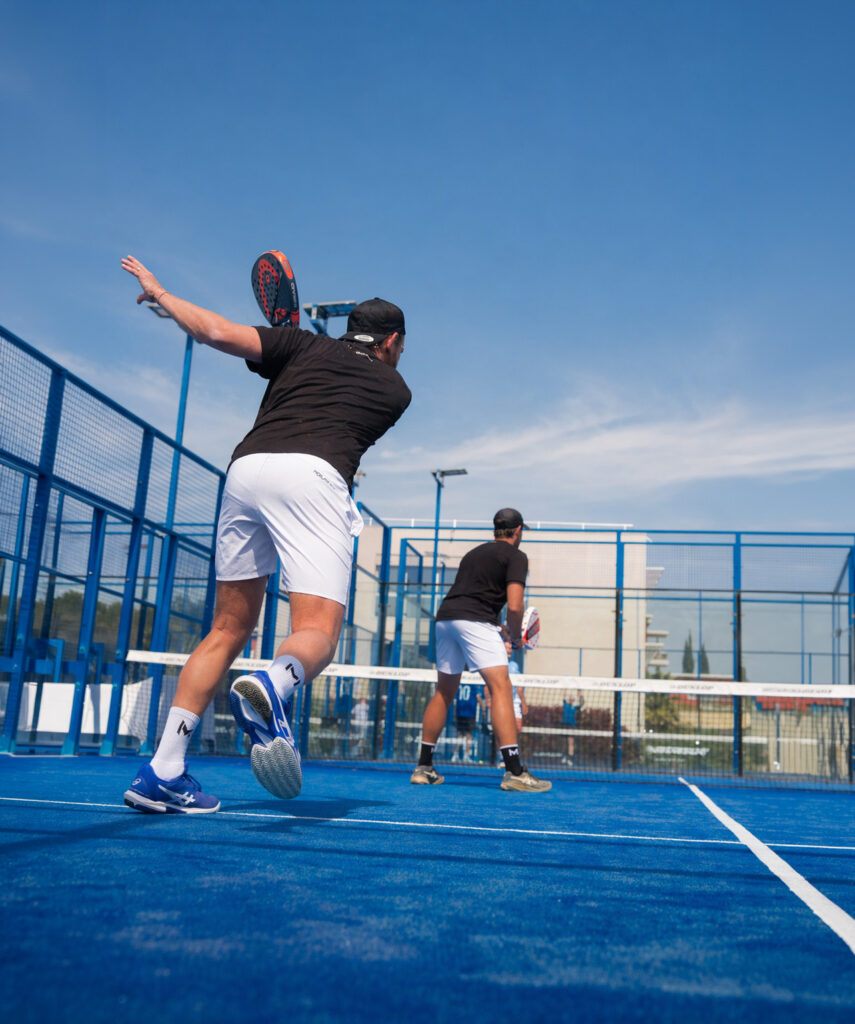
Padel has a reputation as an easy, low-impact sport, largely because rallies are shorter than in tennis and the court is smaller. In practice, that smaller space means more frequent short sprints, sudden stops and quick changes of direction, all packed into a shorter time frame. Combined with repeated overhead and underarm motions for serving, volleying and smashing, this creates real strain on the shoulder, elbow and ankles, especially for players who skip a proper warm-up.
Most padel injuries aren’t caused by a single dramatic moment. They build up gradually through repeated strain on a joint or tendon that was never properly prepared, which is exactly why a structured warm-up matters as much for a casual weekly player as it does for a competitive one.
The most common padel injuries and how to avoid them
Injury | Common cause | Prevention |
Padel elbow (tendinitis) | Repeated vibration and impact through the arm, especially with poor technique or an unsuitable racket | Warm up the forearm and wrist, check racket weight and grip size, and focus on clean technique over power |
Shoulder strain | Repeated overhead motion from serving and smashing without adequate shoulder mobility | Include shoulder rotations and light overhead movement in the warm-up before hitting any serves |
Ankle sprains | Quick lateral movement and sudden direction changes on a hard court surface | Add lateral footwork drills and ankle mobility work before playing, and wear court-appropriate shoes |
Lower back strain | Twisting motions during smashes and low volleys, often with poor core engagement | Warm up the core and hips with light rotational movement before intense hitting begins |
A complete pre-match warm-up routine
A good padel warm-up moves from general to specific: raising your heart rate first, then mobilising the joints padel relies on most, then finishing with light ball contact before playing at full intensity. This routine takes about 10-12 minutes and can be done individually or with a partner.
Step | What to do |
1. Raise your heart rate | 2-3 minutes of light jogging, skipping or side steps to get blood flowing before any stretching |
2. Mobilise the shoulders | Arm circles and light overhead reaches to prepare the shoulder for serving and smashing |
3. Mobilise the ankles and hips | Ankle circles, hip openers and lateral lunges to prepare for quick direction changes |
4. Activate the core | Light rotational movements to prepare the trunk for twisting shots like smashes and low volleys |
5. Light ball contact | Gentle groundstrokes and volleys at increasing intensity, finishing with a few relaxed serves |
Skipping straight to step 5 — hitting balls without any prior movement preparation — is one of the most common habits Mouratoglou coaches see among club players, and one of the easiest to fix.

Recovery habits after playing matter too
Injury prevention doesn’t end when the match does. A short cool-down of light movement and stretching helps the body recover faster and reduces stiffness before your next session. Paying attention to how a joint or muscle feels the day after playing, rather than ignoring mild soreness until it becomes a real issue, is one of the simplest habits that separates players who stay injury-free long term from those who deal with recurring problems.
Hydration and adequate rest between sessions also play a bigger role than most players expect, particularly for those playing multiple times a week without any recovery days built in.
Common warm-up mistakes to avoid
Mistake | Fix |
Going straight from the car park to hitting full-power serves | Follow the full progression — cardio, mobility, activation — before any hard hitting |
Static stretching (holding a stretch) before playing | Save static stretching for after the match; use dynamic movement like arm circles and lunges beforehand |
Only warming up the arm and ignoring the legs | Include ankle and hip mobility, since padel’s lateral movement puts as much strain on the lower body as the swing does on the arm |
Treating the warm-up as optional on casual match days | Keep a short version of the routine even for relaxed matches, since injuries build up over many sessions, not just intense ones |
When to see a professional
Occasional muscle soreness after a match is normal. Sharp pain during play, swelling that doesn’t improve within a day or two, or discomfort that changes how you move should be checked by a physiotherapist or doctor rather than played through. Continuing to play on an unaddressed injury is one of the most common ways a minor strain turns into a long-term problem.

Build injury prevention into your coaching
A good warm-up routine is most effective when it becomes automatic, and coached sessions are one of the easiest ways to build that habit early. Mouratoglou coaches integrate proper warm-up and movement preparation into every session, so players build these habits alongside their technical and tactical development rather than treating injury prevention as a separate concern.
Ready to play? Head to M Padel’s Find a club page to locate the nearest padel court, check opening hours, and book your first game.
FAQ
How long should a padel warm-up be?
A thorough warm-up takes about 10-12 minutes, moving from light cardio to joint mobility and finally light ball contact. Skipping straight to hitting balls without this preparation is one of the most common causes of avoidable injury.
What is padel elbow and how do I prevent it?
Padel elbow is a tendon overuse injury similar to tennis elbow, usually caused by repeated vibration and impact through the arm. Warming up the forearm and wrist, checking your racket’s weight and grip size, and focusing on clean technique over pure power all help prevent it.
Why are ankle injuries common in padel?
Padel involves frequent lateral movement and sudden stops within a small court, which puts real strain on the ankles. Ankle mobility work in the warm-up and court-appropriate shoes both reduce the risk of sprains.
Do I need to warm up if I'm only playing a casual match?
Yes. Most padel injuries build up gradually through repeated strain rather than a single dramatic moment, so even a casual, low-intensity match benefits from a short warm-up that prepares the shoulders, ankles and core.
When should I stop playing due to pain?
Sharp pain during play, swelling that doesn’t improve within a day or two, or discomfort that changes how you move are signs to stop and get checked by a professional, rather than continuing to play through it.