Padel vs Tennis: Which Racquet Sport Should You Choose?
Explore the key differences between padel and tennis to find the sport that suits you best. Dive into our guide and discover your perfect match!
Key Takeaways
- Padel is generally easier to start, always played in doubles format, and has experienced explosive growth worldwide since 2015–2020.
- Tennis offers deeper individual technical challenge, more tradition, and a wider global infrastructure of clubs and tournaments.
- Both sports differ significantly in court size (padel 20m x 10m enclosed vs tennis 23.77m x up to 10.97m open), rackets (stringless vs strung), and ball pressure.
- At M Padel, we typically recommend beginners and social players start with padel, while performance-driven athletes should choose based on their long-term goals.
Padel vs Tennis in a Nutshell
Padel and tennis are two racquet sports that share scoring logic but deliver completely different on-court experiences. Understanding the key differences helps you pick the right fit for your goals, schedule, and playing style.
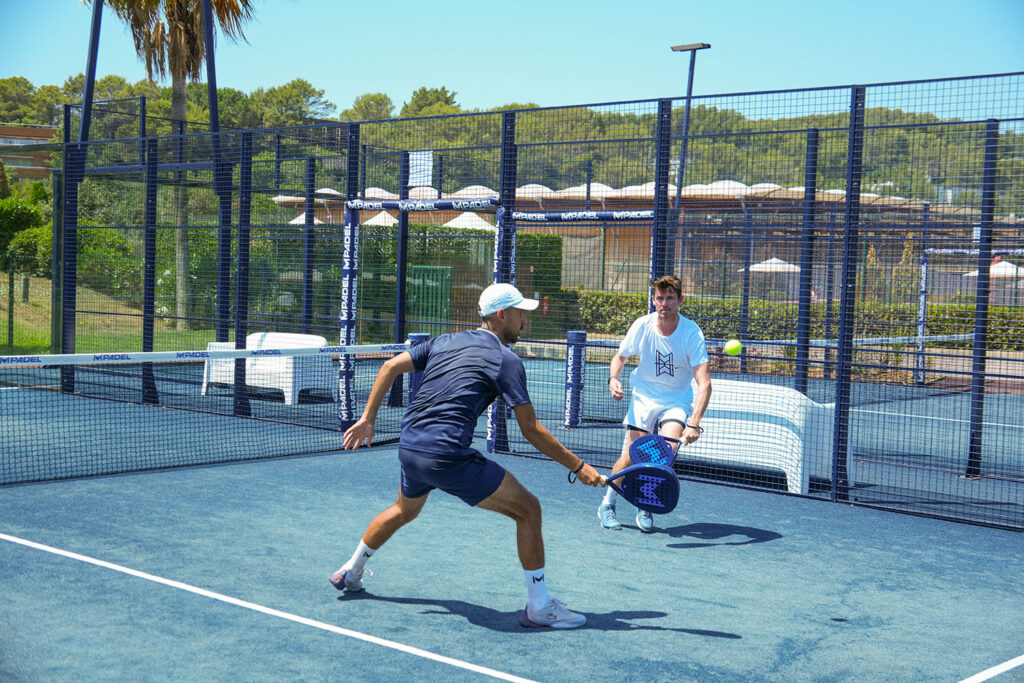
Padel is a strategic game invented in Mexico in 1969 by Enrique Corcuera. It’s typically played as 2-vs-2 on a 20m x 10m enclosed court with glass walls and wire mesh sections. The sport gained massive popularity in Spain during the 1990s and has since spread across Europe and beyond.
Tennis is a historic racket sport formalised in England in the late 19th century. It’s played on larger open courts (23.77m long, up to 10.97m wide for doubles matches) with surfaces ranging from clay to synthetic grass to hard courts.
Feature | Padel | Tennis |
Court size | 20m x 10m | 23.77m x 8.23–10.97m |
Walls | Glass walls and metal mesh | No surrounding walls |
Format | Always doubles | Singles or doubles |
Serve | Underhand serve | Overhand serve |
Racket | Solid paddle with small holes | Strung racquet |
Ball bounce | Lower pressure, slower pace | Higher pressure, faster |
Both sports use the same scoring system (15–30–40–game, sets, matches) but feel entirely different when you step on court.
Who Should Play Padel vs Tennis?
The right sport depends on your personality, fitness goals, and what courts are available near you. Here’s how different player types typically fit into each sport.
If you’re a beginner in racquet sports, padel usually offers faster progress. Most newcomers manage consistent rallies within their first one or two sessions. The smaller court, slower ball bounce, and underhand serve reduce frustration and make padel easier to enjoy from day one. Tennis, while rewarding, demands more power and technique before rallies feel satisfying.
If you value sociability, padel wins hands down. The doubles format means you always play with a partner, encouraging communication and teamwork. Many clubs organise social leagues and mix-ins where you meet new people. The social aspect makes padel especially appealing for groups and after-work sessions.
If you seek maximum technical depth, tennis delivers a higher individual skill ceiling. Serve variety (kick, slice, flat), topspin and slice mastery, and complex footwork patterns offer endless room for improvement. Tennis players often spend years refining strokes—a journey that appeals to competitive personalities.
If you’re a former athlete or managing injuries, padel generally puts less stress on shoulders and elbows. Without the repeated heavy overhand serves of tennis, many players find padel more comfortable. That said, at M Padel, we see plenty of tennis players adding padel as a complementary, more relaxed format rather than completely replacing tennis.
Courts and Playing Surfaces
Court dimensions create the most notable differences between padel and tennis, directly affecting movement, tactics, and the way you score points.
Aspect | Padel | Tennis |
Length | 20m | 23.77m |
Width | 10m | 8.23m (singles) / 10.97m (doubles) |
Walls | 3–4m glass back walls, side walls partly mesh | None (open rectangular court) |
Surface | Artificial turf with sand infill | Clay, hard courts, or grass |
Padel courts differ from tennis courts in one fundamental way: the surrounding walls keep the ball in play. After the ball bounce on the floor, players can return shots off the glass walls, creating extra angles and longer rallies. This enclosed court design rewards strategic thinking over pure power.
Tennis relies on open space, depth, and lateral coverage. The playing surface matters enormously—clay slows the ball and favours sliding movements, while grass and hard courts produce a fast paced game with lower bounces.
From a practical standpoint, padel requires less land. Six padel courts fit in the space of two tennis courts, which explains why new sport facilities are popping up rapidly in urban areas.
Equipment: Rackets, Balls, and Shoes
Understanding equipment helps you budget and choose gear that matches your skill level.
Rackets:
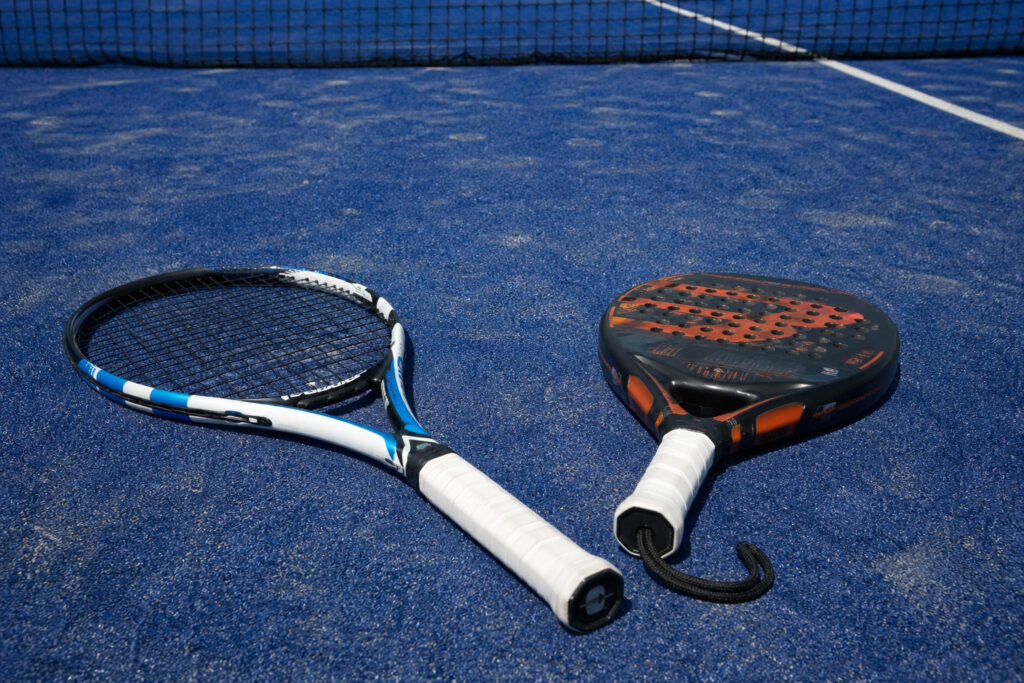
- Padel rackets (called “palas”) are solid, foam-filled with perforated faces and no strings. They feature shorter handles and come in three shapes: round (more control), teardrop (balanced), and diamond (more power). The lighter weight and solid surface make them forgiving for beginners.
- Tennis rackets use a strung racquet frame with variable head sizes (95–110 sq in). String tension affects power and control, giving players more customisation but also requiring more maintenance.
Balls:
- Padel balls look similar to tennis balls but have lower pressure, producing a slower pace and gentler ball bounce suited to the smaller court.
- Tennis balls are pressurised to ITF standards for a plastic ball-like responsiveness—similar in concept to a wiffle ball’s role in training, though obviously different in construction. They reduce air resistance less, maintaining speed over the large court.
Shoes:
Both sports require non-marking court shoes. Padel shoes often have herringbone soles tuned for synthetic grass and controlled sliding, while tennis shoes vary by surface.
Budget ranges:
- Beginner padel setup (racket + balls + shoes): €150–250
- Beginner tennis setup (racket + balls + shoes): €180–300
Rules, Scoring, and Match Flow
Both sports share the same basic rules for scoring: games progress 15–30–40, with sets typically played to six games and tiebreaks at 6–6. However, several practical differences affect how the game continues on court.
Serving:
- Padel requires an underhand serve. The ball must bounce behind the service line before being struck below waist height into the opponent’s service box diagonally. Two consecutive points of service attempts are allowed if the first faults.
- Tennis allows overhand serves with a toss 2–3m high. The serving team can use power on the first serve and play safer on the second.
Wall play: In padel, after the ball bounces on the floor, it can rebound off the glass walls and still be in play. This is a major difference from tennis, where any contact with fences or backstops ends the point wins for the opponent.
Scoring variations: Many amateur padel events use no-ad scoring (the next point wins at deuce), while tennis more often uses traditional advantage scoring, which can extend games by two consecutive points or more.
Format: Padel is almost exclusively doubles at club level, meaning tactics revolve around net coverage, lobs, and partner communication. Tennis routinely offers singles matches for those who prefer one-on-one competition.
Game Style, Technique, and Physical Demands
The technical demands of each sport shape how you train and what skills you develop.
Padel game style:
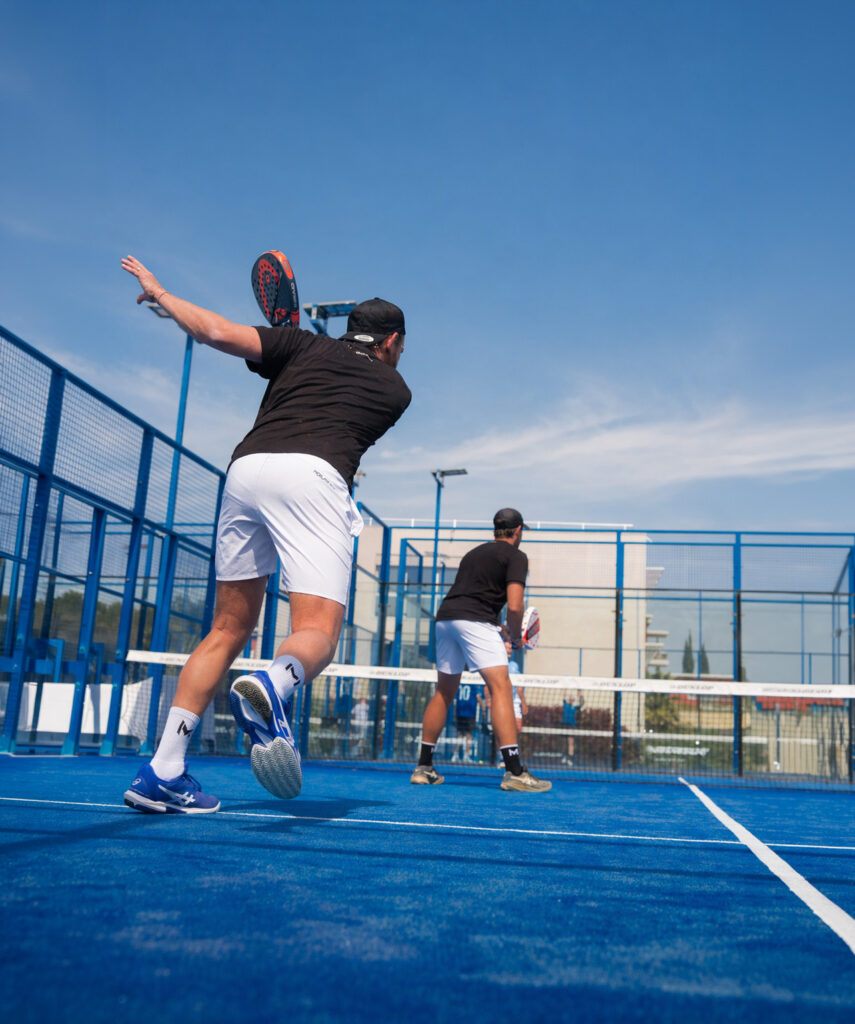
- Rewards anticipation, positioning, and soft hands over raw power
- Key shots include the bandeja (defensive overhead), vibora (sidespin wall shot), chiquita (short volley), and deep lobs
- Rallies average 8–12 shots, making it a strategic game of patience and angles
- About 60–70% of points are won at the net
Tennis game style:
- Rewards strong serving, aggressive groundstrokes, and fast footwork
- Topspin forehands regularly exceed 100 km/h at club level
- Rallies average 4–8 shots, with serve dominance playing a larger role
- Players must cover a much larger court area
Physical demands: Tennis is generally more physically demanding, involving longer sprints and higher calorie burn (800–1000 kcal/hour vs padel’s 600–800 kcal/hour). Padel involves frequent direction changes on the smaller court but tends to be slightly lower impact on joints.
From M Padel’s perspective, coaches often see players grasp basic padel tactics within 5–10 sessions, whereas consistent tennis technique usually takes longer to stabilise.
Popularity, Culture, and Where You Can Play
Tennis padel comparisons often come down to availability and culture. Tennis is globally established with millions of tennis players across continents and a mature tournament system dating back over a century.
Padel’s rapid expansion tells a different story. After strong growth in Spain (now over 25,000 padel courts) and Argentina, courts multiplied across Europe between 2015 and 2025. The UK and France alone added thousands of courts, with apps like Playtomic booking millions of hours annually.
Cultural differences:
- Tennis clubs often carry a more formal, traditional image with dress codes and membership ladders
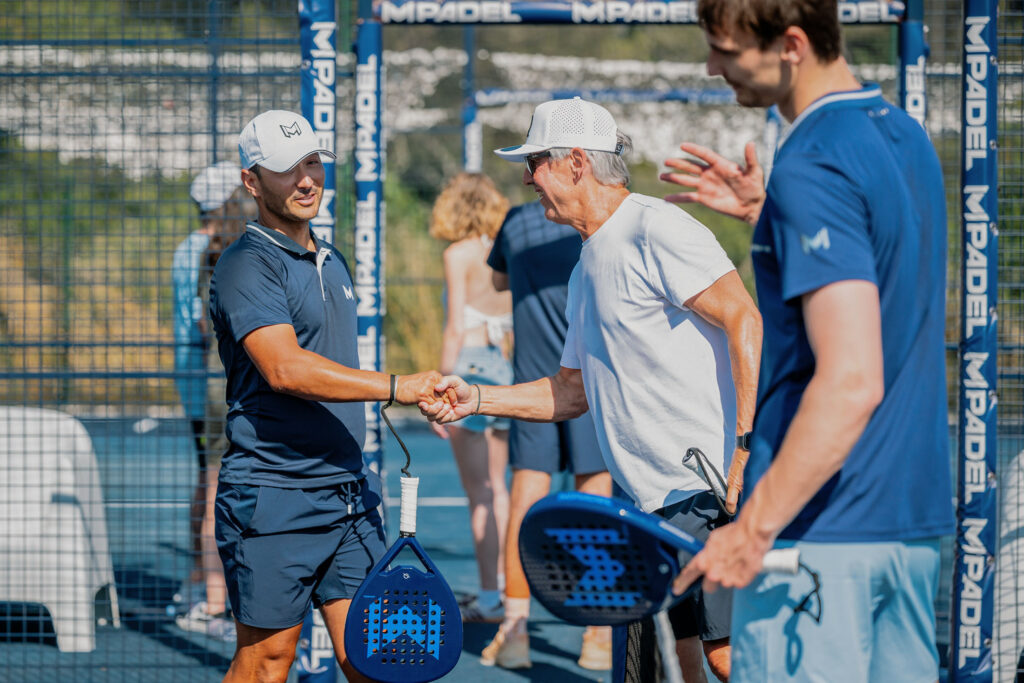
- Padel venues (like M Padel) tend to be more informal with music, social events, and after-game hangouts
Check local court maps and booking apps to see whether padel courts or tennis courts are more accessible near you—availability strongly influences the better choice.
Costs and Accessibility
Both sports are accessible at various budget levels, though the cost structure differs.
Equipment: Entry-level setups for either sport run €150–300 total. Padel rackets often start around €60–100, while tennis rackets begin at €80–150.
Court fees: Padel courts are usually booked by the hour for four players. Even if the total court price is €20–40, splitting it means €5–10 per person. Tennis public courts often cost €5–15/hour, while private clubs may require annual membership.
Coaching: Group padel sessions feel especially cost-effective when split between four players. Both sports offer accessible group lessons for beginners.
Accessibility note: Padel’s simpler technique and enclosed court make it easier for mixed-level groups and families to play padel together from day one. A good grip on basic shots develops quickly.
How Padel Complements Tennis (and Vice Versa)
You don’t have to choose just one. Many players enjoy both sports throughout the week.
Padel can improve volleying, reflexes, and tactical patience for tennis players, especially those accustomed to pure baseline play. The net-focused game dynamics sharpen skills that transfer directly to doubles tennis.
Tennis builds stronger serves, footwork, and physical endurance that translate into more explosive movement and powerful overheads on the padel court.
Many clubs now host both padel and tennis, allowing players to cross-train and keep practice varied. From M Padel’s perspective, tennis players shouldn’t fear “losing” their technique—most adapt quickly and benefit from adding 1–2 padel sessions weekly.
Padel vs Tennis: How to Decide What’s Best for You
Both sports offer excellent cardio, skill development, and community. The right choice depends on what you value most.
- Choose padel if you’re new to racquet sports, prefer the doubles format, have limited time, and want fast, enjoyable progress
- Choose tennis if you enjoy individual challenges, following professional tours, and investing time into refining strokes and fitness
- Try both for a month if possible—alternating sessions helps you discover which atmosphere, pace, and learning curve feels right
- Consider your body—padel may suit those seeking a slightly lower-impact option without sacrificing intensity
- Check local availability—the sport with more courts near you will be easier to play consistently
At M Padel, we welcome beginners and experienced players alike. Book a court, join a group session, or ask our team for guidance on starting or combining both sports.
FAQ
Here are answers to common questions we hear from players comparing these two racquet sports.
Is padel really easier to learn than tennis?
Most beginners manage rallies in padel within their first one or two sessions because of the smaller court, slower ball, and underhand serve. Tennis requires mastering a more technically demanding serve and consistent groundstrokes, which typically takes longer. However, “easier” doesn’t mean shallow—high-level padel remains very tactical and challenging.
Can playing padel ruin my tennis technique?
For most club players, padel does not ruin tennis technique. While there are differences (shorter swings, compact strokes, underhand serve), padel can actually sharpen volleys, reactions, and tactical awareness that help in doubles tennis. Serious competitors may want to separate technical training sessions to keep movement patterns clear.
Which sport is better for overall fitness: padel or tennis?
Tennis usually involves more high-intensity sprints and longer court coverage, offering slightly higher cardiovascular load per rally. Padel still provides excellent cardio with shorter, more frequent bursts emphasising coordination and agility. Choose the one you’ll play more often—consistency matters more than small differences in calorie burn.
Is padel safer for joints than tennis?
Many players with shoulder or elbow issues find padel more comfortable due to the absence of repeated heavy overhand serves. However, padel includes quick direction changes and overhead shots, so proper warm-up and technique remain important. Consult a physio if you have existing injuries before committing to either sport.
What do I need to start playing padel at M Padel?
A beginner typically needs sports clothing, court shoes, and a basic padel racket. Balls and rental rackets are often available at the venue. M Padel can advise on choosing the right racket shape and weight during your first visits. We suggest booking an introductory session to learn core rules and basic shots before joining regular social games.