Padel Doubles Strategy: How to position yourself and win more points
Key Takeaways
- Padel is always played in doubles, so positioning and teamwork determine far more points than raw hitting power, a well-positioned pair beats two strong individual hitters more often than not.
- Winning pairs move together as a connected unit, maintaining equal spacing, and advance to the net as a team whenever the point allows it.
- The back glass is a tool, not an obstacle, letting the ball rebound before returning it gives you the time and control needed to work back toward the net.
- Communication that happens before the point starts (who covers the middle, who calls the lob) prevents the hesitation that costs points mid-rally.
- Understanding core padel tactics — bandeja, víbora, chiquita, lob — is often what separates intermediate players from advanced ones.
Why positioning beats power in padel
Padel is always played in doubles, which means your positioning matters just as much as your shot-making. Two players with average technique but excellent positioning will consistently beat two strong hitters who play as individuals. This is one of the first things Mouratoglou coaches work on with new players, because it changes how you win points immediately, without needing a bigger swing.
Unlike tennis, padel’s enclosed court and glass walls make every point a rally-based game. Winners are earned by creating space and exploiting it as a team, not by overpowering your opponents. That’s why coaches emphasise where you stand over how hard you hit, and why a pair that understands positioning can often outlast and outmanoeuvre more athletic opponents.
The Golden Rule: move together, not alone
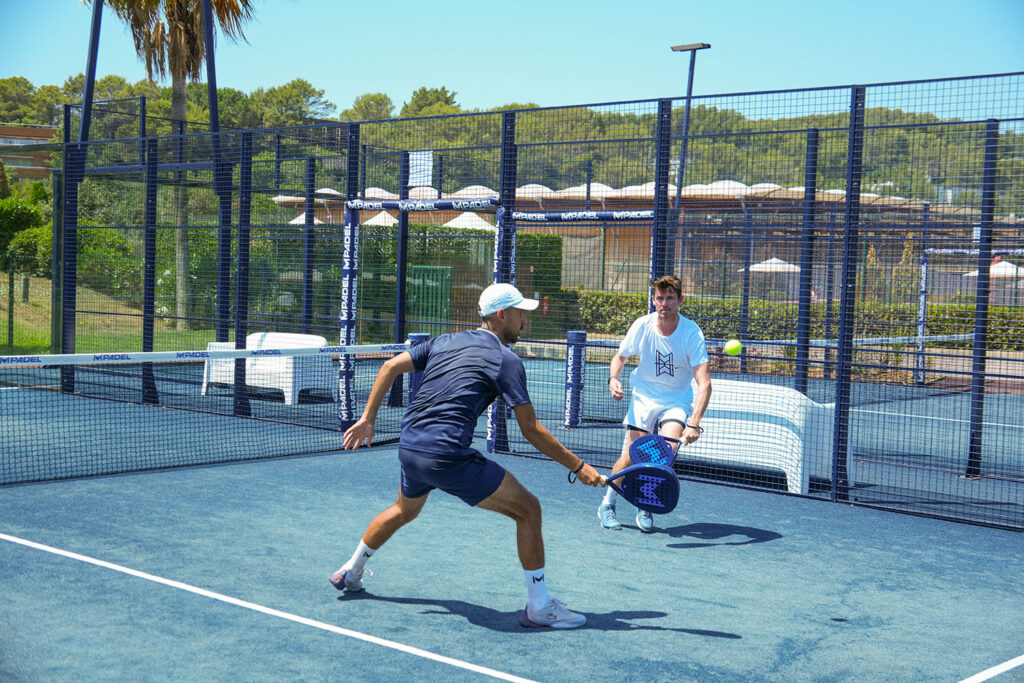
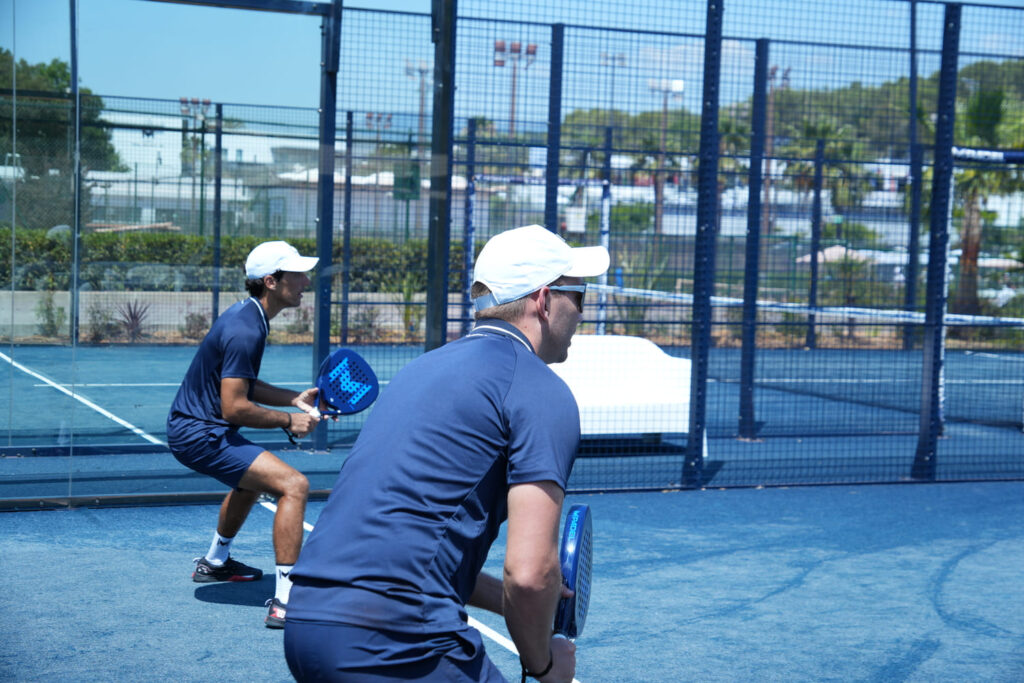
Your team should move as a connected pair : when your partner moves left, you shift left too, maintaining the same distance between you at all times. This keeps the middle of the court covered and avoids leaving gaps your opponents can exploit down the line.
A simple way to visualise this: imagine an invisible bar connecting you and your partner. Wherever the bar moves, both of you move with it, staying roughly parallel to the net. Pairs who drift out of sync, one pushing forward while the other stays back, create exactly the kind of open space opponents look to attack.
Attacking position vs defensive position
Every point in padel moves between two broad team positions. Recognising which one you’re in — and how to move from one to the other — is the foundation of doubles strategy.
Aspect | Attacking Position (at the net) | Defensive Position (at the back) |
Where you stand | Both players near the net, roughly level | Both players near the back glass |
Priority | Control the point, cut off angles, finish with a volley | Stay in the point, use the glass, buy time |
Key shot | Volley, smash, bandeja | Lob, defensive return off the glass |
Common mistake | Standing too passively instead of closing space | Rushing a low-percentage attacking shot |
Goal | Force an error or a weak reply | Find a lob to reset and move forward together |
Use the back wall as an ally, not an obstacle
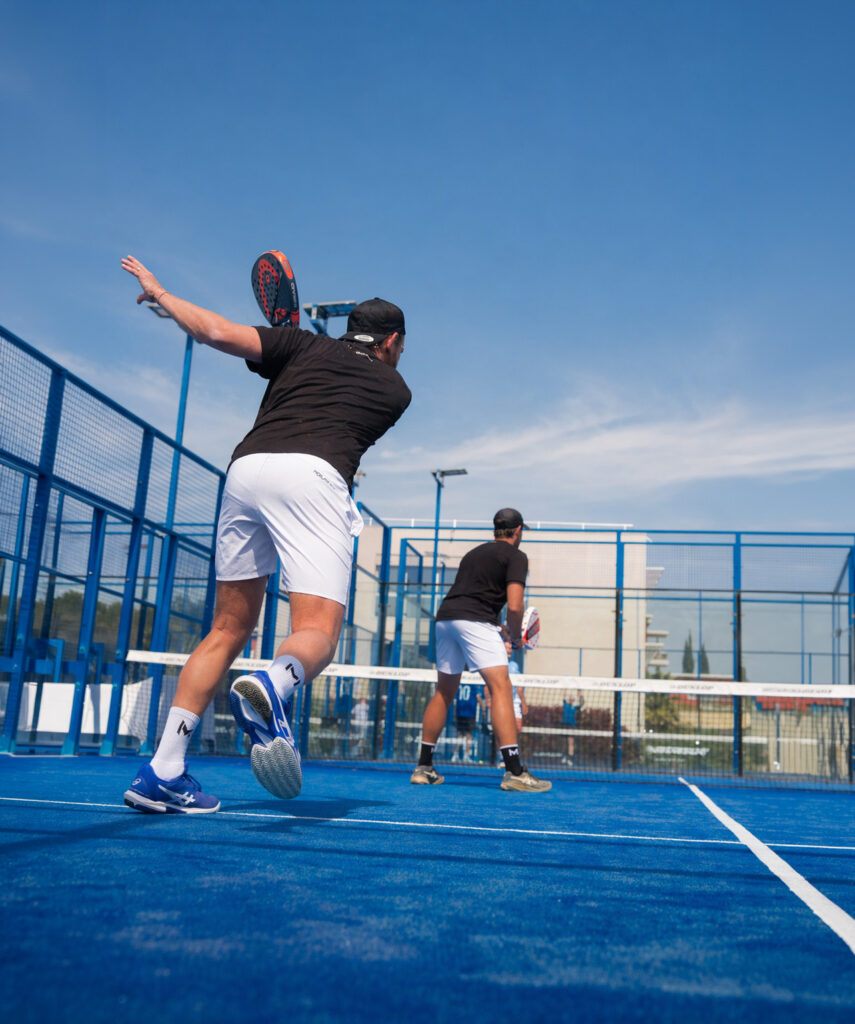
When pinned at the back, the glass becomes a tool rather than a threat. Let the ball come off the back wall before returning it, this gives you more time and control than trying to volley or rush your shot. Many club players instinctively try to hit the ball before it reaches the glass, out of habit from tennis, and end up rushing shots they didn’t need to rush.
Staying calm in defence, rather than forcing a low-percentage attacking shot from a poor position, is what lets a pair work its way back toward the net. The glass buys you time, the discipline to use that time well is what separates composed pairs from ones who panic under pressure.
Communicate before the point, not during it
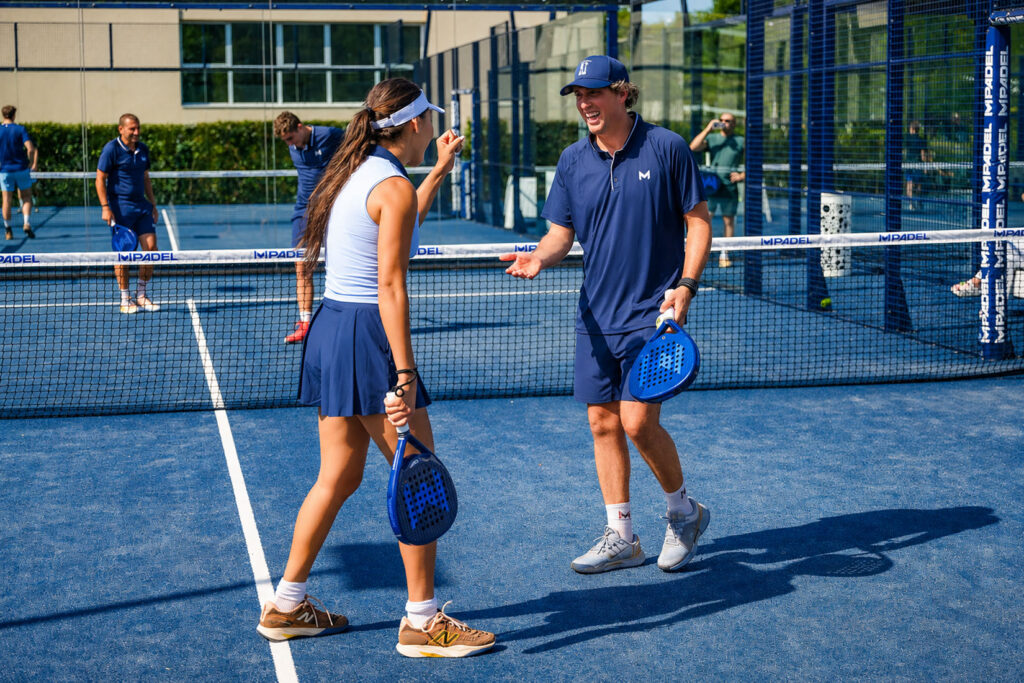
The best padel pairs decide their plan before the point starts: who serves where, who takes the middle ball, who calls the lob. Mid-point communication is often too late, a simple “mine” or “yours” helps, but a pre-agreed game plan prevents the hesitation that costs points.
This is particularly important on balls hit straight down the middle, which cause more doubles confusion, and more unforced errors, than any other shot in padel. Deciding in advance, for example, that the player with the forehand in that zone always takes the middle ball removes the guesswork entirely.
A glossary of padel tactics
Knowing these terms, and when to use them, is often what separates intermediate players from advanced ones.
Term | Definition |
Bandeja | A controlled overhead shot played from a defensive position near the net, used to stay in the point without risking a smash. |
Víbora | An aggressive variation of the bandeja, hit with more side-spin to push opponents away from the net. |
Chiquita | A soft, low shot aimed at opponents’ feet as they approach the net, designed to force a difficult volley. |
Lob | A high, deep shot used to move opponents away from the net and reclaim attacking position. |
Contrapared | A shot played directly off the back wall without the ball bouncing on the ground first, often used defensively. |
Salida | The moment a defending pair transitions from the back of the court toward the net, usually set up by a lob. |
Common positioning mistakes and how to fix them
Mistake | Fix |
One player stays back while the other rushes the net | Advance together only when the point allows it — moving as a unit avoids leaving the middle exposed |
Trying to volley the ball before it reaches the back glass | Let the ball bounce off the glass first to gain time and control in defence |
No plan for who takes the middle ball | Agree in advance which player covers straight balls down the centre |
Standing passively at the net instead of closing space | Move forward and cut off angles actively once your team reaches the attacking position |
Forcing a risky shot from a defensive position | Prioritise a well-placed lob to reset the point and move back toward the net together |
Positioning drills to practice with your partner
Reading about positioning is a starting point, but these habits are built on court, through repetition with your regular partner. Try adding these three drills to your practice sessions.
- Shadow movement drill: without a ball, one player calls directions (left, right, forward, back) and both partners move together, keeping equal spacing at all times.
- Middle-ball drill: a feeder sends balls down the centre line and the pair practises calling and covering it consistently, without hesitation.
- Glass-to-net drill: starting pinned at the back, the pair practises using the glass to buy time, then advancing together as a unit once a lob is played.
None of these drills require advanced technique — they build the decision-making and spacing habits that hold up under real match pressure, which is exactly what separates pairs who look organised from pairs who scramble.
How singles rules differ from doubles tactics
While padel is played almost exclusively in doubles, understanding how singles positioning differs can sharpen your doubles instincts too. In singles, a player covers the entire width of the court alone, which rewards depth and consistency over aggressive net play. In doubles, that same court is shared between two players, which is precisely why lateral synchronisation — moving together as a unit — matters so much more than it would if you were covering the space alone.
Many club players who learned tennis singles first instinctively try to cover too much court by themselves in padel doubles, drifting out of position to reach balls that are actually their partner’s responsibility. Trusting your partner’s coverage, and staying disciplined in your own half, is often a bigger improvement than any single shot correction.
Build your tactical game with a coach
Positioning and shot selection are learned faster with structured coaching than trial and error on court. Mouratoglou’s coaching methodology builds tactical awareness alongside technique from the very first lesson, so players develop the instincts described above under real match conditions rather than only in theory.
Find an M Padel club near you to start training with a certified coach, or explore our membership options for ongoing development.
FAQ
What is the best positioning strategy in padel doubles?
Both players should move together as a connected pair, maintaining equal spacing, and advance to the net together whenever possible — that’s where most points are won. Staying in sync with your partner matters more than either player’s individual positioning.
How do padel players communicate during a match?
Effective pairs agree on a game plan before the point starts (who covers the middle, who calls the lob) and use short, clear calls like “mine” or “yours” during fast exchanges, rather than relying on mid-point discussion.
What is a bandeja in padel?
A bandeja is a controlled, defensive overhead shot played near the net to stay in the point safely, rather than attempting a risky smash. It’s one of the first tactical shots Mouratoglou coaches introduce beyond basic technique.
Should beginners focus on power or positioning first?
Positioning. Good court position and shot selection win far more points at club level than raw power, and it’s the foundation coaches build technique on top of.
Why is the middle ball so important in padel doubles?
Balls hit down the centre create the most confusion between partners and the most unforced errors in the sport. Deciding in advance who covers that zone removes hesitation and prevents points being lost to miscommunication.